

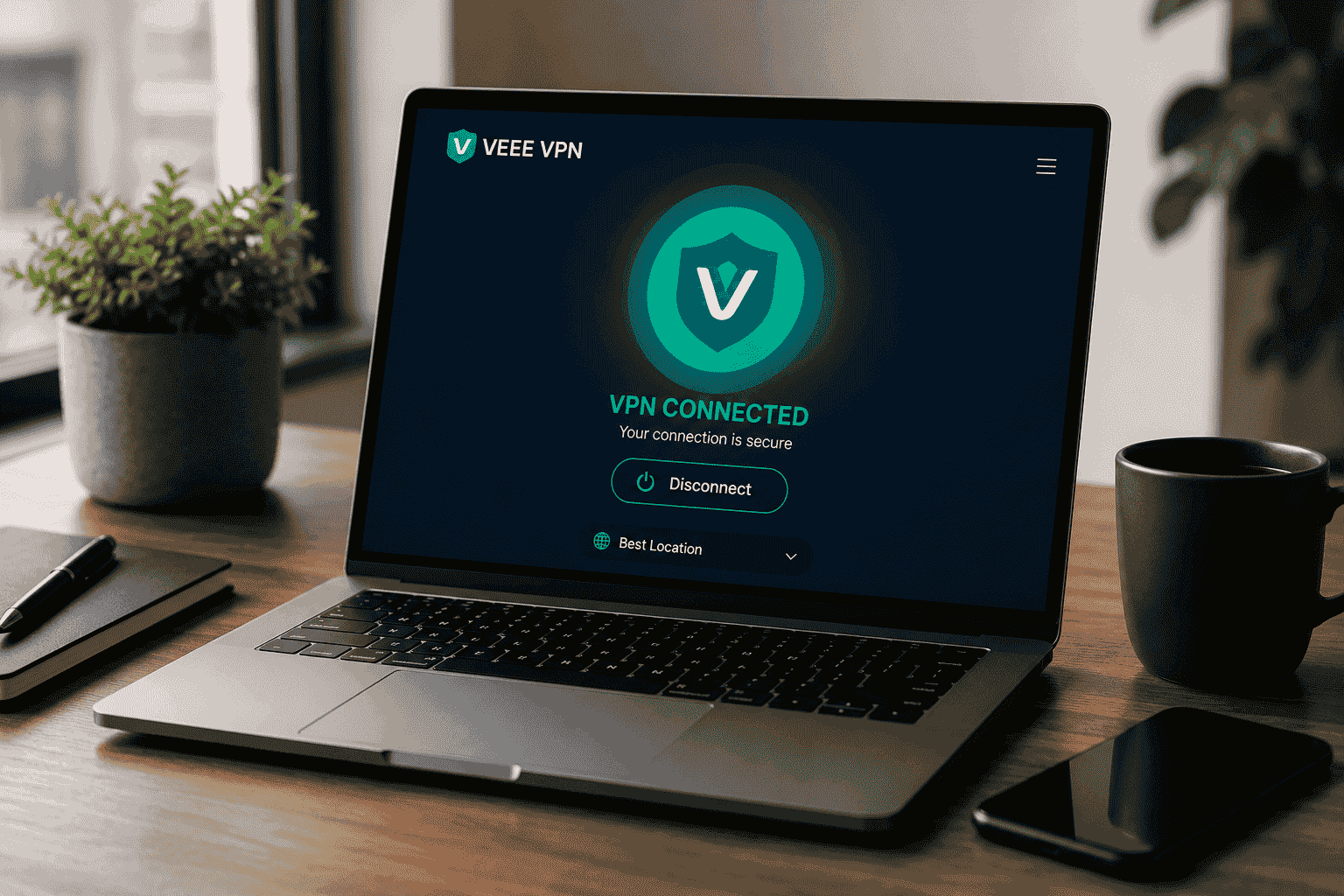
VEEE VPN (also called VEEE+ VPN or Veee 加速器) is a VPN service designed primarily for users who need reliable access to the open internet, especially in regions with heavy internet restrictions such as China. It promises encrypted connections, unlimited bandwidth on paid plans, streaming support, and tools like Shadowsocks to bypass censorship.
The service has gained attention because it focuses on Chinese users and travelers rather than competing directly with global VPN brands. This review examines its features, security claims, real-world performance, pricing, and limitations to help you decide whether it’s worth using.
Unlike many VPN reviews that focus only on speed tests, this review looks at transparency, privacy practices, and whether VEEE VPN is a realistic choice for users who regularly deal with internet restrictions. Those factors ofen matter more than raw download speeds when choosing a VPN.
VPN performance vary depending on where you live, your internet provider, and the websites or streaming services you access most often. Instead of relying solely on marketing claims, it’s important to consider transparency, independent security audits, and long-term reliability before choosing a VPN.
Key Features of VEEE VPN
VEEE VPN includes the features most users expect from a modern VPN. According to its official documentation, paid plans offer AES-256 encryption, a kill switch, split tunneling, and support for Shadowsocks and V2Ray to improve access in regions with internet restrictions. Apps are available for Windows, macOS, Android, iOS, and Chrome.
The company also advertises a strict no-logs policy. However, unlike providers such as NordVPN or Proton VPN, this claim has not been independently audited, making it harder to verify.
The table below summarizes key differences between VEEE’s free (daily check-in) tier and its paid Pro plan:
| Feature | Free Plan | Premium Plan |
|---|---|---|
| Website Access | ✅ Yes | ✅ Yes |
| Streaming Access | ❌ No | ✅ Yes |
| VPN Servers | Random servers | 2,600+ servers |
| Countries | Up to 5 | 85+ countries |
| Maximum Speed | 2 Mbps | Up to 1000 Mbps |
| Devices | 1 | Up to 10 devices |
| Encryption | Standard VPN encryption | AES-256 encryption |
| Kill Switch | Limited | Yes |
| Split Tunneling | No | Yes |
Performance and Reliability
VEEE VPN performs well for everyday browsing, HD streaming, and general web use when nearby servers are available. Like most VPNs, speed depends on server location, congestion, and your own internet connection.
Users in mainland China generally report good results during normal periods thanks to Shadowsocks and V2Ray support. During government crackdons, however, connections can become unreliable, a limitation shared by nearly every VPN operating behind the Great Firewall.
One thing many VPN reviews don’t mention is that performance inside China can change week to week. A VPN that works well during a normal month may struggle during major political events or periods of increased internet restrictions. That’s why many long-term China residents keep a backup VPN rather than relying on a single provider.
Security and Privacy Considerations
VEEE VPN includes the security features most users expect, including encrypted connections, DNS leak protection, and a kill switch on supported apps. The biggest question isn’t the encryption, it’s transparency.
Transparency has become one of the biggest factors when evaluating VPN providers. Several leadin VPN companies now publish independent security audits and transparency reports to verify their no-logs claims. Since VEEE VPN hasn’t released comparable third-party audits, users who prioritize privacy should weigh that carefully before subscribing.
Although the company states that it follows a strict no-logs policy, no independent security audit has verified that claim. Users who require maximum privacy should consider this before relying on the service for sensitive activities.

How VEEE VPN Compares to Other VPNs
To put VEEE VPN in context, let’s compare it to some well-known VPN services:
| VPN Service | Jurisdiction | Servers | No-Logs Audit | Target Use | Remarks |
|---|---|---|---|---|---|
| VEEE VPN | (Unclear, likely Asia-based) | Thousands (limited regions) | Self-claimed (no audit) | China unblock, streaming, travel | Budget-friendly, works well for streaming Chinese apps; best for casual use. Lacks transparency and giant networks. |
| ExpressVPN | British Virgin Is. | 3,000+ servers, 105 countries | Audited (PricewaterhouseCoopers) | General purpose, streaming, high-security | Industry-standard; fast and reliable worldwide; pricey; consistently unblocks Netflix/China. |
| NordVPN | Panama | 5,800+ servers, 60+ countries | Audited (PwC annually) | Security, P2P, multi-hop, privacy | Very large network, double-VPN options; generally reliable in China with obfuscation nodes. |
| Astrill VPN | Seychelles | 300+ servers, many in Asia | No (proprietary) | China access (popular among expats) | Longtime China-focused VPN; has special “StealthVPN” mode; known to be pricey, with mixed privacy records. |
| Proton VPN | Switzerland | 2,000+ servers, 60+ countries | Audited (SEC Consult) | Security and privacy (journalists) | Strong privacy focus, Tor integration, transparent policies; slower free tier. |
A larger server network doesn’t automatically make a VPN better. Server quality, reliability, protocol support, and transparency usually have a greater impact on everyday performance than simply advertising thousands of servers. For many travelers, a smaller VPN that consistently works in restrictive regions is often more valuable than a larger provider that struggles during periods of censorship.
In summary, top-tier VPNs (Express, Nord, Proton) offer global scale, audited security, and consistent performance, albeit at higher cost. VEEE VPN’s niche is budget convenience and simplicity for China/travelers. It undercuts others on price (annual plans around \$3–5/month) and provides some advanced tech like Shadowsocks. But its server network is much smaller and without third-party audits. If you need a VPN that “just works” worldwide with verifiable privacy, established services may be better. If your main need is unblocking Chinese censorship on a limited budget, VEEE VPN could be useful, particularly on its paid tier that includes obfuscation protocols.
Who Should (and Shouldn’t) Use VEEE VPN
Like most VPN services, VEEE VPN isn’t designed for every type of user. Whether it’s the right choice depends on why you’re using a VPN in the first place.
Good fit if:
- You mainly need access to blocked websites in China.
- You want an inexpensive VPN for streaming and everyday browsing.
- You prefer payment methods such as Alipay or WeChat Pay.
Consider another VPN if:
- You require independently audited privacy protections.
- You depend on consistent VPN access during periods of heavy internet censorship.
- You need advanced features such as multi-hop routing or extensive P2P support.
Is VEEE VPN Worth It?
For casual browsing, streaming, and accessing blocked websites, VEEE VPN offers good value considering its pricing and China-focused features. However, if privacy is your highest priority or you regularly handle sensitive information, choosing a provider with independently verified no-logs audits remains the safer long-term decision.
Conclusion
VEEE VPN fills a specific niche rather than trying to be the best VPN for everyone. It offers useful anti-censorship tools, affordable pricing, and straightforward apps, making it appealing for users in or traveling to China.
Its biggest weaknesses aren’t speed or usability, they’re transparency and independent verification of its privacy claims. Without an independent security audit or clearer information about its infrastructure, it’s difficult to recommend for users with demanding privacy requirements. For everyday browsing and streaming, VEEE VPN may be sufficient. For sensitive work, established VPN providers with independently audited privacy practices remain the safer choice. At OreviaNews, we publish practical technology guides and software reviews designed to help readers compare tools based on real-world use rather than marketing claims. If you’d like to learn more about the infrastructure that powers modern online services, you can also read our guide on Cloud Computing Essentials: Unlocking the Benefits.
FAQs
What is VEEE VPN?
VEEE VPN is a VPN service that encrypts internet traffic and helps users access blocked websites and apps. It’s especially popular among users in China because its paid plans support censorship-bypass technologies like Shadowsocks and V2Ray.
Is VEEE VPN free?
Yes. VEEE VPN offers limited free access through daily check-ins. Paid plans remove usage restrictions and include additional features such as stronger encryption, more server options, and anti-censorship protocols.
Is VEEE VPN safe?
It claims to follow a strict no-logs policy. However, its privacy claims have not been independently audited, so users requiring maximum anonymity may prefer providers with verified security audits.
Does VEEE VPN keep logs?
VEEE VPN states that it follows a no-logs policy, but unlike several leading VPN providers, this claim has not been independently verified through a third-party security audit.
Does VEEE VPN work in China?
Yes, many users report that VEEE VPN works in China, particularly the paid version with Shadowsocks and V2Ray support. Like all VPNs operating behind the Great Firewall, performance may vary during periods of increased censorship.
Can I get a refund?
VEEE advertises a money-back guarantee, but some users report confusion about refund eligibility. Review the refund policy carefully before purchasing, especially for longer subscription plans.
What are the best alternatives?
Popular alternatives include ExpressVPN, NordVPN, Proton VPN, and Astrill. These providers offer larger server networks, greater transparency, and, in several cases, independently audited no-logs policies.
References
- VEEE VPN – Official Website (Features, Pricing & Privacy Policy)
- VEEE VPN – Official FAQ
- VEEE+ VPN – Apple App Store
- Reddit (r/chinalife) – User Experiences with VEEE VPN
- PinkCrow – VEEE VPN Review
- OpenVPN – Official Documentation
- WireGuard – Official Documentation
- NIST – FIPS 197 (AES Encryption Standard)
- Shadowsocks – Official GitHub Wiki