

B2B Data Enrichment in 2026: How It Works, Costs, and Risks
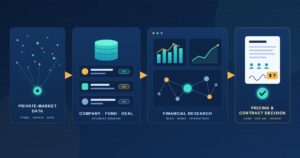
B2B data enrichment appends missing firmographic, technographic, and contact fields to records you already own. A form fill arrives with a name and work email; enrichment adds job title, company size, industry, tech stack, and (when available) a verified direct dial. That is the core function.
In 2026 the category is more fragmented and more expensive than the definition suggests. Clay split billing into Data Credits and Actions on 11 March. Clearbit’s standalone APIs are gone, its data now lives inside HubSpot and does not consume HubSpot Credits on paid plans. ZoomInfo added parallel waterfall enrichment inside GTM Studio and exposed its data to ChatGPT, Microsoft Copilot Studio, and other AI agents. GDPR and CCPA rules for the output remain stricter than most sales teams assume.
This guide covers how enrichment actually works, what it costs under the new pricing models, where it fails, and the four habits that matter more than any vendor demo. Pricing and product details are current as of early October 2026 and change frequently.
Quick answer: B2B data enrichment fills gaps in records you already have. It is different from prospecting, which finds new records, and from intent data, which signals potential buying activity. Some platforms combine all three capabilities.
Table of Contents
What B2B Data Enrichment Actually Adds
Vendors often group several data types under the same “enrichment” label. Knowing which type you actually need makes provider comparisons easier.
| Data type | Typical fields | Primary use |
|---|---|---|
| Firmographic | Industry, employee count, revenue range, HQ location, funding | Account scoring, segmentation |
| Technographic | CRM, marketing automation, cloud, security stack | Competitive displacement, message tailoring |
| Contact | Verified work email, direct dial, title, seniority, LinkedIn URL | Routing, personalization, outreach |
| Intent / signal | Job changes, hiring spikes, funding events, content research | Timing (not identity) |
Intent data is sold alongside enrichment but answers a different question. Enrichment tells you who and what. Intent suggests when. Bundling the two is convenient for vendors and confusing for buyers.
Quick answer: Enrichment ≠ intent data. One completes the record; the other flags research behavior.
B2B Data Enrichment vs. Data Cleansing
Data cleansing and data enrichment solve different problems.
Data cleansing fixes or removes information that is wrong, duplicated, incomplete, or inconsistently formatted. Data enrichment adds information that was not already present, such as industry, company size, job title, technology usage, or verified contact details.
The two processes work best together. Enriching a database full of duplicates or incorrect domains can produce a larger database without making it more reliable.
How Enrichment Works in Practice
Most enrichment systems need one or more match keys, such as a work email, company domain, name, CRM record, or another identifier, to locate the corresponding company or contact record.
Three operational modes matter:
- Batch – Upload a list, receive an enriched file. Lowest cost, data ages immediately.
- Real-time – Form fill or new CRM record triggers a lookup in seconds so routing rules have data.
- Continuous / trigger-based – Scheduled re-checks or event-driven refreshes (job change, funding, etc.).
Contact data generally changes faster than stable firmographic fields. People change jobs, titles, departments, and employers, while company information such as industry or headquarters usually changes less frequently. That makes refresh cadence particularly important for contact-level enrichment. Treat any vendor’s decay-rate statistic as directional unless the methodology and sample are clearly documented.
Waterfall Enrichment: Higher Coverage, Stacked Cost
Waterfall enrichment can improve coverage because different providers have different datasets and geographic strengths. But adding providers does not guarantee better accuracy. A waterfall can return more records while also increasing the number of fields that require validation.
The practical question is therefore not “How many providers does the waterfall use?” but “How many records become usable after validation?” Measure match rate, field-level accuracy, bounce rate, mobile-number validity, and cost per verified record.
Clay changed its pricing model in March 2026 by separating Data Credits, which pay for marketplace data, from Actions, which measure the platform work used to run enrichments, AI tasks, API calls, and other workflow operations. Clay also says unsuccessful enrichment attempts do not consume Data Credits or Actions, while successful provider results can consume both depending on how the workflow is configured.
That distinction matters when estimating waterfall costs. A long waterfall does not automatically cost the same amount on every record; usage depends on which providers return data, whether validation is performed, and whether you use Clay’s marketplace or your own provider API keys.
| Approach | Strength | Weak spot | Best fit |
|---|---|---|---|
| Single database | Predictable cost and workflow | Coverage gaps | Narrow, well-covered markets |
| Waterfall (multi-provider) | Potentially broader coverage | More workflow complexity | Niche or international segments |
| CRM-native (HubSpot) | Low integration friction | Less provider flexibility | Teams already on HubSpot |
| Manual research | Useful for high-value accounts | Slow and difficult to scale | Top-tier named accounts |
What Changed in 2026
| Date | Change | Why it matters |
|---|---|---|
| Dec 2023 (background) | HubSpot completes its acquisition of Clearbit | Clearbit’s B2B data becomes part of HubSpot’s broader data strategy |
| Mar 2026 | ZoomInfo introduces parallel waterfall enrichment in GTM Studio | Teams can evaluate multiple additional data sources without building their own provider sequence |
| 11 Mar 2026 | Clay splits billing into Data Credits + Actions; marketplace data 50–90 % cheaper | Same workflow can cost more or less depending on design |
| 2026 | HubSpot expands Data Enrichment across paid plans | Core Data Enrichment does not consume HubSpot Credits, although some related features do |
| Jun–Aug 2026 | ZoomInfo connects data to ChatGPT, Microsoft Copilot Studio, Claude, and other AI agents via MCP | Enrichment moves from CRM chore to on-demand AI call |
Clay pricing reality check (October 2026): Clay now separates platform usage from purchased data. Its current pricing page shows Launch and Growth plans with separate Action and Data Credit allowances, while additional data and usage can increase the total cost. The exact monthly cost depends on billing frequency, data-provider usage, and workflow design, so buyers should model the workflow rather than compare headline plan prices alone.
Clearbit / HubSpot: Clearbit no longer accepts new standalone subscriptions, with its enrichment capabilities increasingly integrated into HubSpot’s broader data strategy. HubSpot’s current Data Enrichment feature can enrich contact and company records without consuming HubSpot Credits, although some related features, such as Smart Properties, can use credits.
ZoomInfo: ZoomInfo now positions itself as an all-in-one AI GTM platform. Its current company materials describe a data graph containing more than 100 million companies, 500 million contacts, and billions of signals. Its GTM.AI layer also exposes ZoomInfo data through MCP integrations with tools such as ChatGPT, Claude, Microsoft Copilot, and other AI clients. These scale figures are company-reported rather than independent measurements.
ZoomInfo’s GTM Studio also introduced a parallel waterfall that evaluates 25+ additional data sources and uses confidence scoring rather than simply taking the first available result. ZoomInfo says the feature is included for GTM Studio customers without additional credit consumption.
Enrichment is increasingly being exposed through APIs, CRM workflows, and AI-agent integrations rather than used only as a standalone lookup interface.
The Legal Part Most Teams Skip
B2B does not automatically mean “outside privacy law.” A named employee’s work email, job title, phone number, or other information linked to an identifiable person can be personal data under GDPR and similar privacy laws.
For enrichment, the key questions are how the data was obtained, why it is being processed, what lawful basis applies, what information must be provided to the individual, and how objections or deletion requests are handled.
For example, when personal data comes from a source other than the individual, GDPR Article 14 generally requires privacy information within one month, when the individual is first contacted, or when the data is first disclosed, subject to the regulation’s exceptions.
For direct marketing, legitimate interests can sometimes be appropriate, particularly for business contacts, but it is not an automatic exemption. Organizations still need to identify the purpose, establish necessity, balance their interests against the individual’s rights and expectations, and comply with applicable electronic-marketing rules.
Regulators also treat data enrichment itself as a data-broker activity when organizations combine information from different sources to add to existing profiles. That means vendor due diligence, source transparency, objection handling, and data-governance controls matter.
A Data Processing Agreement may also be required when a vendor processes personal data on your behalf, but not every enrichment provider necessarily has the same legal role. Determine whether the provider is acting as a processor, independent controller, or another type of data intermediary before assuming a DPA is the correct contract.
In the United States, California’s CCPA business-to-business exemption expired on December 31, 2022. That does not mean every B2B record is automatically covered in every situation, because CCPA obligations depend on whether the organization and data fall within the law’s scope.
This is general information, not legal advice. Organizations running enrichment across multiple countries should have counsel review their data sources, lawful bases, notices, vendor contracts, and marketing practices.
Where Enrichment Doesn’t Help
It will not fix a broken CRM or a fragmented data architecture. If records are duplicated, ownership rules are inconsistent, or systems cannot exchange data reliably, enrichment can simply add more information to an underlying structural problem. In larger organizations, that can become part of a broader IT modernization issue.
More fields do not equal more revenue. Adding data that no scoring model or sequence uses simply creates clutter.
It can overwrite good data. A rep corrects a title after a call; a nightly sync replaces it with a stale vendor value. HubSpot’s current enrichment controls let administrators configure overwrite behavior, but providers differ in how they handle existing values. Ask every vendor exactly when enriched fields can replace CRM data before enabling continuous sync.
Coverage is uneven by region and by field. A provider that performs well for U.S. email addresses may perform differently for European mobile numbers or smaller companies. Test each shortlisted provider against the geography, industries, and job roles you actually target.
How to Measure the ROI of B2B Data Enrichment
The value of enrichment is not the number of fields a provider adds. It is whether better data improves a measurable business outcome.
Start with the metrics that enrichment is expected to influence:
- Match rate: How many records can the provider enrich?
- Field-level accuracy: How often are the returned values correct?
- Email and phone validity: How many enriched contacts remain usable after verification?
- Lead routing: Does better job-title or company data send leads to the correct sales team?
- Conversion rate: Do enriched records convert to meetings, opportunities, or customers at a higher rate?
- Cost per usable record: What do you actually pay for each record that passes your validation criteria?
- Revenue impact: Does the additional usable data generate enough pipeline or revenue to justify the enrichment cost?
For example, a provider that fills 90% of records is not necessarily better than one that fills 70%. If the first provider produces more incorrect phone numbers while the second produces fewer but more reliable records, the second may deliver better business value.
A simple evaluation is to compare a representative group of enriched records with a control group that was not enriched. Track downstream outcomes such as qualified meetings, opportunities, conversion rates, and revenue contribution over time.
This also helps prevent a common mistake: treating database size or field-fill rate as the final measure of success. The goal is not to create a larger database. It is to create more usable data that improves a business decision or workflow.
How to Evaluate a Provider
Ignore headline database sizes. “500 million contacts” says nothing about your 3,000 target accounts.
- Prepare a representative sample of your own records, ideally 300–500 if your database is large enough.
- Run the same sample through each shortlisted tool in the same week.
- Measure match rate, field-fill rate, and post-verification bounce rate. Spot-check a subset for accuracy.
- Demand overwrite behavior, refresh cadence, data sources, and a signed DPA before any production pull.
- Price the exact workflow you will run—including failed lookups and fallback providers—not the list price.
If a vendor will not allow the sample test, treat that as a signal.
What to Do First
Audit the CRM before buying anything. Your broader software stack matters too: disconnected CRM, marketing, analytics, and automation tools can create the same data problems that enrichment is supposed to solve. Choose the three or four fields that actually change a decision (routing, scoring, segmentation) and enrich only those. Test on your own data, document overwrite rules in writing, and sign the appropriate vendor agreement before data moves.
“If I already have a waterfall running in Clay or another tool, should I still pay for ZoomInfo or Cognism?”
It depends on where your existing waterfall performs well and where it leaves gaps. A common approach is to use multiple providers for broader coverage, then use a primary provider such as ZoomInfo, Cognism, or Apollo for high-value accounts or ongoing contact refreshes. But the right mix depends on your target market, data fields, provider coverage, and verification process.
Instead of assuming one model is cheaper or more accurate, compare the cost per verified, usable record. Test the same sample across your current waterfall and shortlisted providers, then compare match rate, field-level accuracy, phone and email validity, refresh performance, and total workflow cost. Your own conversion and pipeline data will tell you whether adding another provider is worth it.
FAQs
What is B2B data enrichment?
Appending missing company and contact fields (title, size, verified email, etc.) to records you already own using external providers.
How is enrichment different from data cleansing?
Cleansing fixes or removes bad data (duplicates, typos). Enrichment adds new fields. Many tools do both.
What is waterfall enrichment?
It checks multiple data providers when the preferred source cannot supply a usable result. This can increase coverage, but it can also increase workflow complexity and cost.
How often should B2B data be enriched?
It depends on the field and how quickly it changes. Contact and job data generally needs more frequent refreshes than stable firmographic fields, so set the cadence around actual data decay and business value.
Is B2B data enrichment legal?
It can be lawful, but B2B does not automatically exempt personal data from privacy rules. The applicable lawful basis, transparency requirements, marketing rules, vendor role, and individual rights depend on the jurisdiction and use case.
How much does B2B data enrichment cost?
Pricing ranges from enrichment bundled into existing CRM plans to usage-based and custom enterprise contracts. Compare the cost of your actual workflow, including successful matches, validation, refreshes, API calls, and fallback providers—rather than comparing monthly plan prices alone.
References
- Clay — What are Actions and Data Credits? — Current explanation of Clay’s Data Credits, Actions, and waterfall usage.
- Clay — Pricing — Current plan structure and Data Credit/Action allowances.
- HubSpot — Get started with data enrichment — Current enrichment availability, credit usage, and workflow controls.
- HubSpot — How data enrichment works — Matching, enrichment behavior, privacy, and overwrite details.
- HubSpot — Clearbit acquisition — December 2023 acquisition announcement.
- Clearbit — New standalone account availability — Current status of standalone Clearbit subscriptions.
- ZoomInfo — Q2 2026 results — Company-reported scale and GTM.AI positioning.
- ZoomInfo — GTM.AI / MCP — Current MCP access to ZoomInfo B2B data through AI assistants.
- European Commission — GDPR obligations — Information requirements when personal data is obtained from another source.
- EUR-Lex — GDPR Article 14 — Official regulation text.
- UK ICO — B2B marketing — Lawful basis and transparency considerations for B2B contacts.
- UK ICO — Data brokers and enrichment — Guidance covering profiling, data enrichment, and data-broker activity.
- California Privacy Protection Agency — CCPA FAQ — Current status of the B2B exemption.